

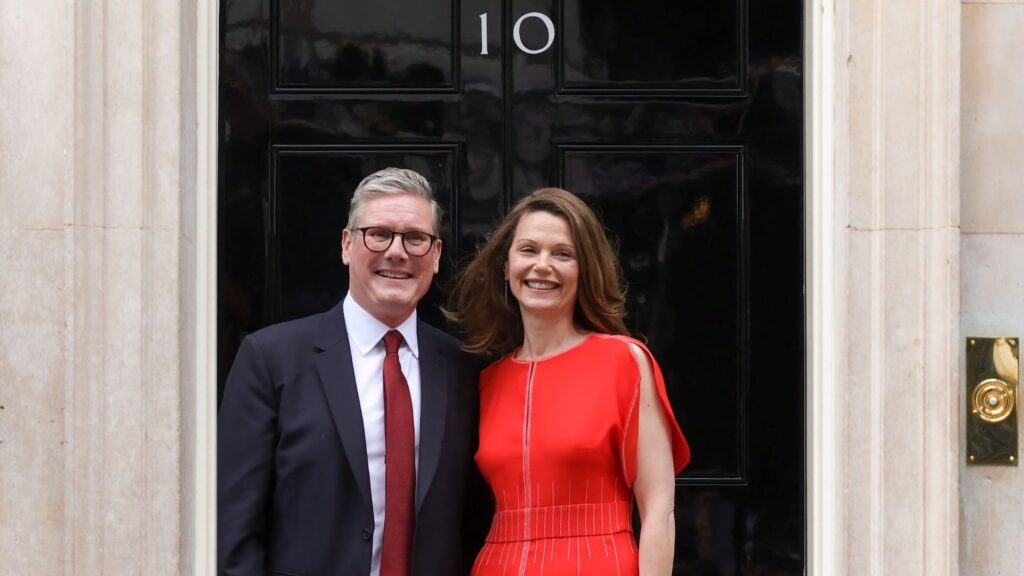
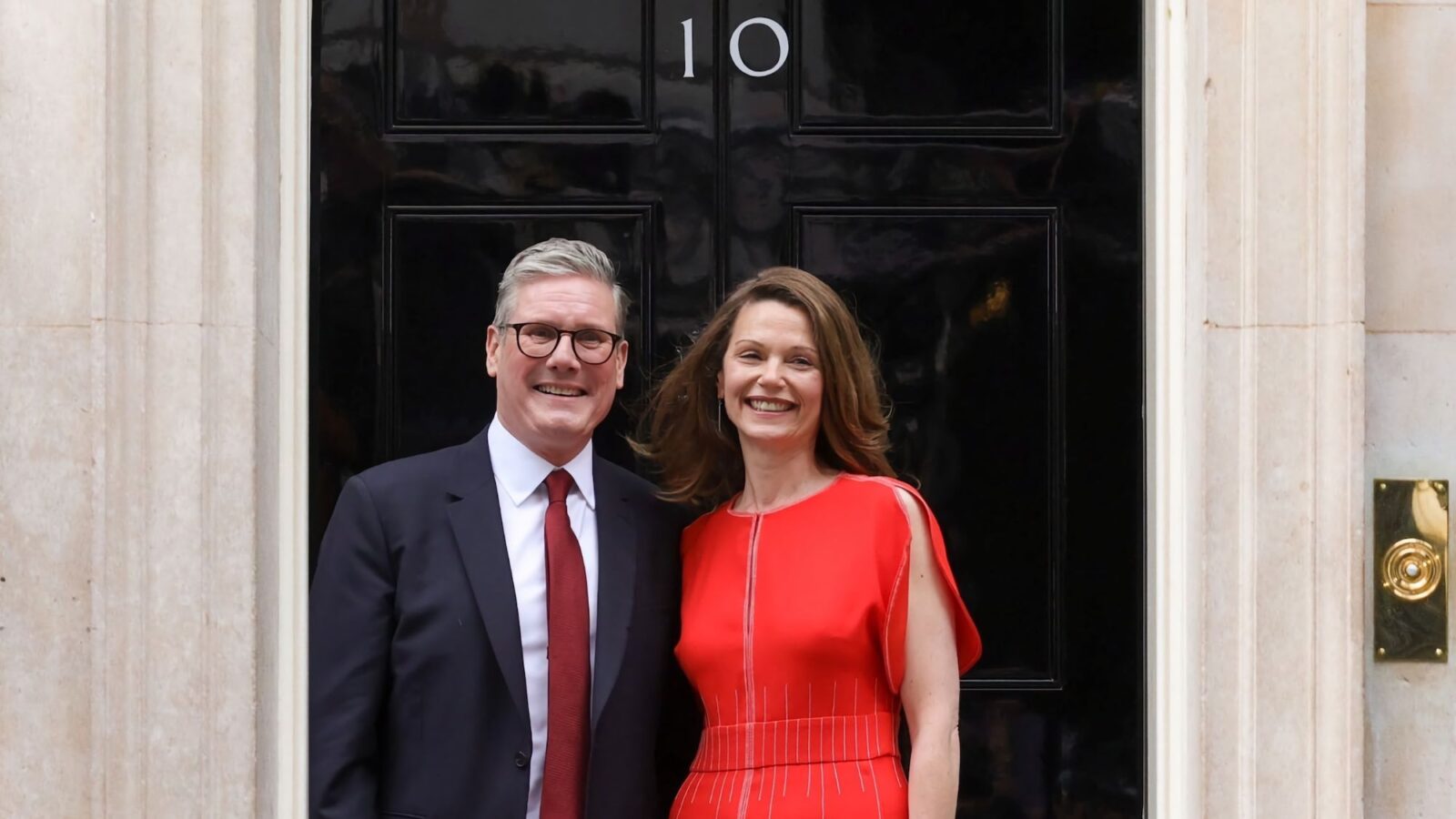
After 14 years in the shadows, Labour once again became become the governing party of the United Kingdom shortly after 5am on Friday morning 5 July 2024. That’s when the counting following Thursday’s election passed the magic 326 parliamentary seat threshold.
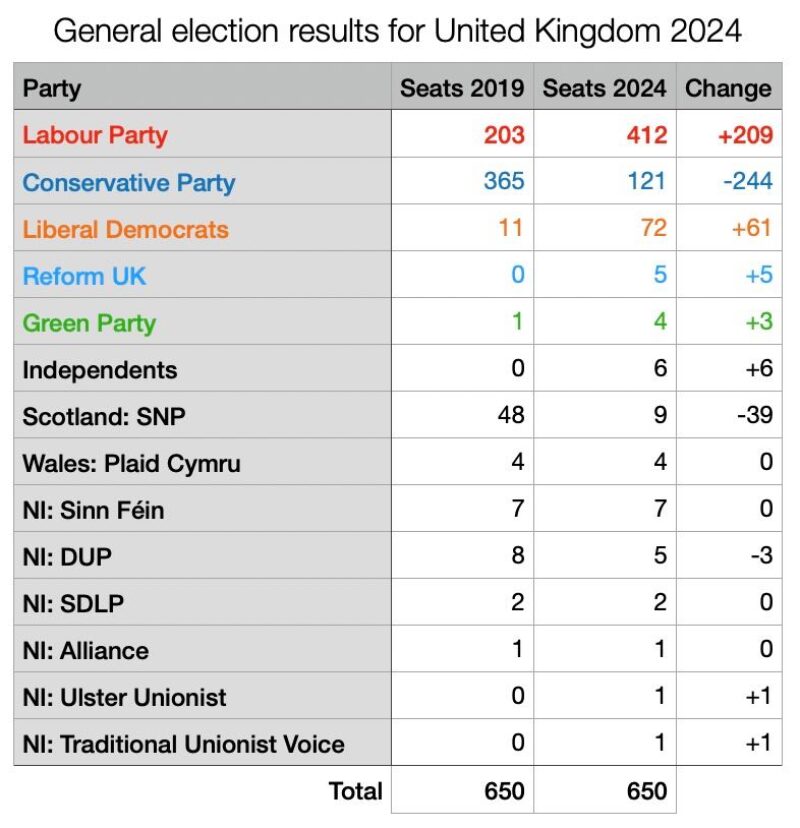
When the votes for the last contested seat had been counted later on Friday, the number of Labour MP seats had ended at 412. That’s more than twice as many Labour MPs as after the disastrous 2019 election, when Labour only retrained 203 seats, and just six fewer than what Tony Blair’s Labour won in the 1997 landslide.
Enormous Tory losses
The Tories, on the other hand, had their worst loss since 1832, dropping from 365 seats in 2019 to 121.
A range of famous and infamous Conservative MPs lost their seats, including Liz Truss, Jacob Rees-Mogg, Penny Morduant, Grant Shapps, Gillian Keegan, Mark Harper, Liam Fox, Johnny Mercer, Lucy Fraser, Thérèse Coffey, Theresa Villiers and Greg Hands.
Beside Labour, this was also a very good election for the Liberal Democrats, who went from 8 seats to 72 (whereof 6 in Scotland), and the Green Party, which went from 1 seat to 4.
More worrying, however, was that Nigel Farage’s private company, Reform UK Party Ltd (until May 2021 known as The Brexit Party Ltd), received 14.3% of the votes (2.1% more than the Liberal Democrats) and won 5 seats.
However, while there was a landslide change of seats between the two parties, the percentage of the national votes didn’t change very much for Labour, just from 32.1% in 2019 to 33.7% in 2024. The main reason for Labour’s large seat win was that voters abandoned the Tories: in 2019, their vote share was 43.7% but now it dropped to almost half, 23.7%.
Another, not so good thing for democracy, is that voter participation was only 59.9%. With the exception of 2001 (when only 59.4% voted), this was the lowest participation in a general election since 1918.
The Scottish bloodbath
There was another party that suffered even worse than the Tories: the Scottish National Party (SNP). Its share of the votes in Scotland dropped from 45% to 30% and it lost 39 of its 48 seats. These went mostly to Labour, who before Thursday’s election only had one Scottish seat, but now has 37 and is once again the party in Scotland that delivers most MPs to Westminster. The Liberal Democrats is another big winner in Scotland. It now has 6 seats there, 4 more than in 2019.
A very red London
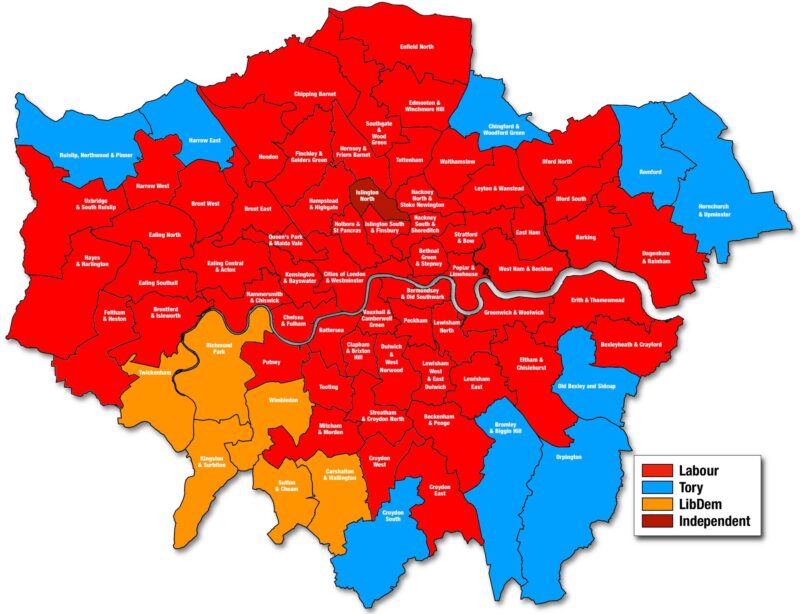
After the 2024 election, 57 of Greater London’s 73 parliamentary constituencies now have Labour MPs. There are only nine on the outskirts that still have Tory MPs, there are six in the southwest that have LibDem MPs, and there is one independent who used to represent Labour (Jeremy Corbyn in Islington North).
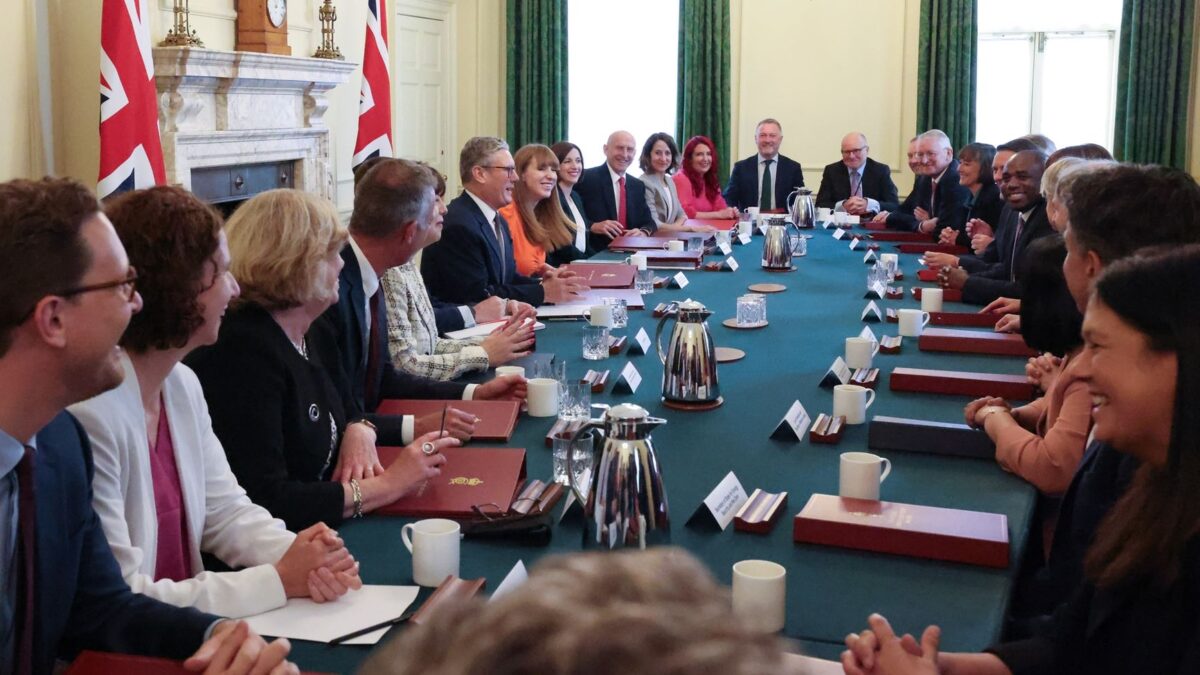
First cabinet meeting
Our new prime minister, Keir Starmer, held his first cabinet meeting on Saturday and promised that Labour would put country before party, and that “this is a government of service to all people, whether they voted for us or not”.